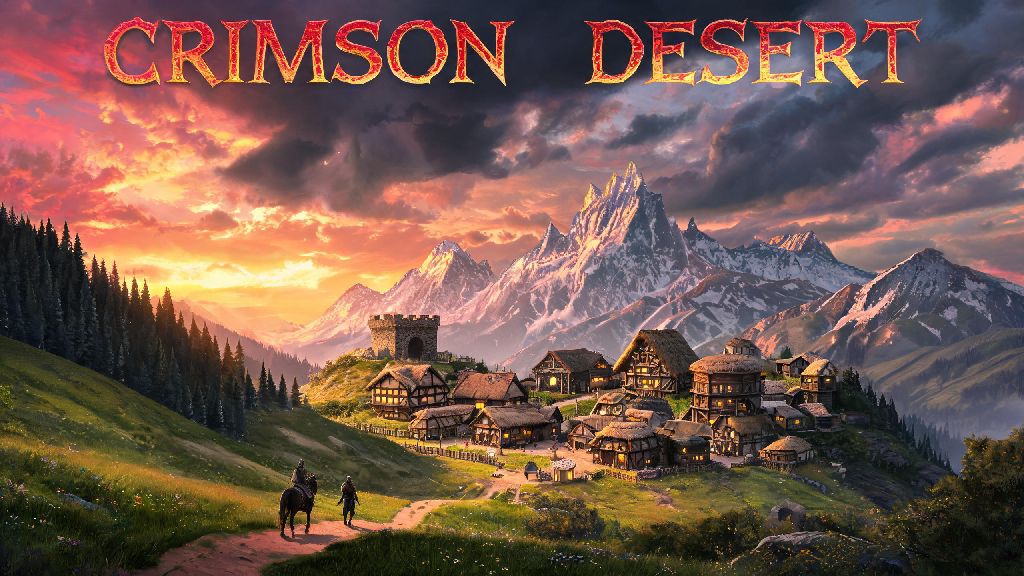
I spent the first three weeks of 2026 glued to my gaming rig, grinding through every corner of the newly launched crimson desert open world instead of sticking to my New Year’s resolution to cut back on screen time. I went into it expecting just another generic fantasy MMO with pretty graphics, but I walked away shocked by how much it rethinks what open world design can look like for live service games. This post breaks down exactly what works, what doesn’t, and who will get the most out of this massive new title.
Core Design Choices That Define the 2026 Crimson Desert Open World
Most modern open world MMOs rely on procedurally generated terrain and copy-pasted points of interest to fill out their maps, but that’s not the case here. Every part of the crimson desert open world feels hand-crafted, not procedurally generated, so you won't run into the same copy-pasted village or dungeon 10 times across the map. Dynamic weather doesn’t just look pretty, it directly changes how you play: sandstorms close off desert routes for hours at a time, heavy rain makes rock climbing slippery and dangerous, and winter snow slows down travel speed if you don’t have cold-resistant gear.
Unlike most open world MMOs that spawn the same mobs in the same spots 24/7, Crimson Desert’s ecosystem shifts based on player behavior. For example, if too many players hunt wolves in a forest area, the deer population will boom, leading to more crop damage in nearby villages, which triggers new side quests for players to help farmers. You also don’t have to follow the main quest to progress: exploration gives you skill points, rare crafting materials, and even unique companion characters you can’t get from the main story. The map is roughly 22 square miles of explorable land, with no loading screens between zones once you finish the initial tutorial, which is a huge win for immersion.
Hidden Exploration Features Most Players Miss Their First 10 Hours
It’s easy to get stuck following the main quest line for your first few hours, but taking time to wander will reward you with way more resources and upgrades than rushing through the story. I missed almost all of these features on my first playthrough, and I ended up restarting my character once I realized how much free loot I was leaving on the table. These are the three most important tricks I wish I knew before I started:
You don't have to fight every enemy you run into while exploring. Most wildlife will leave you alone if you don't get too close, and bandit camps can be snuck past for a stealth XP bonus if you don't want to waste resources on a fight. If you want a full interactive map of all hidden historical sites, you can find the latest community-curated version on the fan-run exploration database that’s updated weekly with new finds.
Pros and Cons of the Open World Design for Casual and Hardcore Players
I’ve played with both casual friends who only log in for 2 hours a week and hardcore guildmates who play 20+ hours a week, and the open world design works surprisingly well for both groups, though it has its flaws. For casual players, the biggest win is the lack of mandatory grind to access high-level areas. You can wander into endgame zones as low as level 15, as long as you're careful to avoid high-level mobs, and you can collect rare materials to sell for gold to get better gear without running dungeons. That's a big part of what makes the crimson desert open world feel so welcoming for new players who don't want to commit 40 hours a week to keep up with their friends. For hardcore players, the dynamic events and world bosses that spawn only once every 3 days give a lot of exclusive rewards that can't be obtained any other way, so there's always a reason to log in even if you've finished the main story.
It’s not perfect, though. The biggest downside right now is the performance hit in heavily populated areas. If you're playing on a last-gen console, you'll likely see frame drops below 30 FPS when there are more than 20 players on screen during world boss fights. The devs have said they’re working on a performance patch due out in March 2026, but it’s a frustrating issue right now for console players. Some of the more remote northern mountain areas also feel a little empty right now, though the devs have announced monthly content drops throughout 2026 that will add more events and quests to those zones. Fast travel also costs in-game currency, so if you're a new player who spends all your gold on gear, you'll be stuck walking everywhere for the first few hours. That's a minor annoyance, but it does force you to explore more, which is a net positive for most people.
Is This Open World Worth Your Time in 2026?
At the $59.99 price point, I don’t recommend this game for everyone, but it’s an easy buy for most fantasy MMO fans. If you're tired of open world games that feel like a checklist of collectibles with no real meaning, you'll love how every area has its own unique story and dynamic events that actually impact the world around you. If you're a fan of other Pearl Abyss games like Black Desert Online, but you wanted a more story-driven open world with less repetitive grind, this is perfect for you. If you only have 1-2 hours a week to play, you can still make meaningful progress without feeling like you're falling behind other players, which is a rare thing for live service MMOs in 2026.
The only people who should skip it are players who hate open world exploration entirely and only want to run linear dungeons or PvP arenas. Even then, you can access most of the instanced content without exploring the open world, but you'll be missing out on a lot of free rewards that make that content much easier. The devs are also very responsive to community feedback: they already adjusted the fast travel costs 2 weeks after launch because players complained they were too high, so the game is only going to get better as the year goes on.
After 80+ hours exploring every corner of the map, I can confidently say the crimson desert open world is one of the most innovative fantasy MMO experiences we've gotten in the last decade. It doesn't fix every flaw of the open world genre, but it takes enough creative risks to feel fresh even for players who have sunk thousands of hours into other similar titles. If you're on the fence about picking it up, wait for the free demo that's dropping next month to test out the starting area, but I think most of you will end up buying the full game after a few hours of wandering the desert and forests. I'm already planning my second playthrough to collect all the historical sites I missed on my first run, and I can't wait to see what new content the devs add later this year.