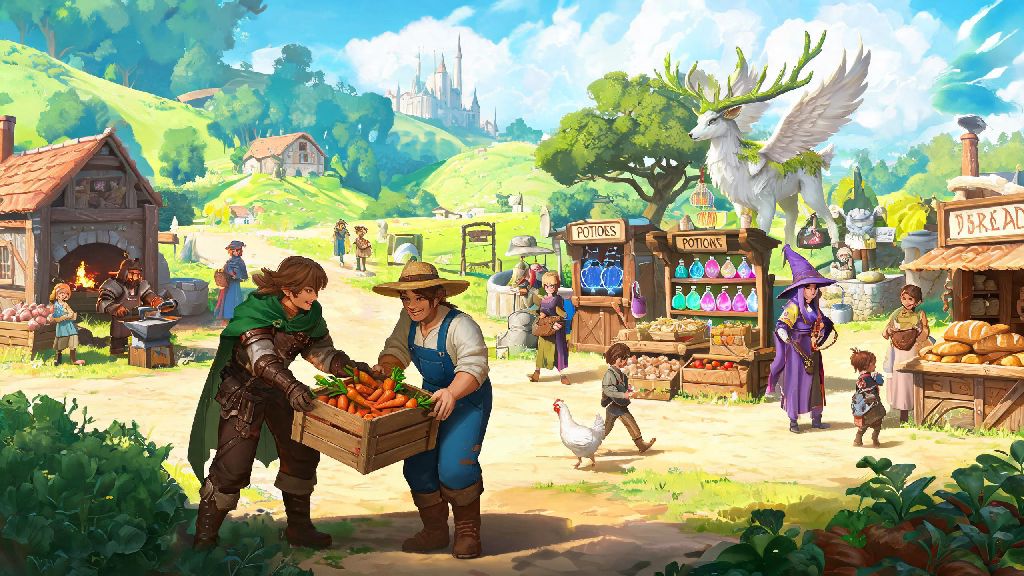
If you’re tired of open-world games filled with meaningless collectibles and static NPCs that never react to your choices, you’ve probably had the Crimson Desert open-world game on your wishlist for a while. I spent 32 hours playing the latest closed beta build, made almost every beginner mistake possible, and walked away seriously impressed with how it reimagines what a fantasy open world can be. This guide breaks down everything you need to know before you start your first playthrough, from core mechanics to avoidable pitfalls.
What Makes the Crimson Desert Open-World Game Stand Out From Other Fantasy RPGs
It’s easy to write off another fantasy open-world title as just another generic RPG, but this one builds on familiar tropes in surprisingly thoughtful ways. The biggest difference is its fully dynamic world, where every NPC has their own daily routine, relationships, and goals that don’t revolve around the player. For example, I helped a small farmer fend off a group of bandits early on, and when I returned to the area 10 in-game days later, he’d expanded his farm into a small trading post and gave me a permanent 20% discount on all supplies. Dynamic weather and environmental effects aren’t just decorative here—they directly change how you play. A sudden sandstorm can cut your visibility to 10 feet and drain your stamina twice as fast, forcing you to take shelter in nearby caves or abandoned camps until it passes.
The combat system also sets it apart from most open-world RPGs. It’s fully action-based, with no tab-targeting, and you have to account for weapon weight, stamina, and even the slope of the ground you’re fighting on. Swinging a heavy two-handed axe on a sandy slope will make you stagger far more than using it on solid rock, for example. It has a small learning curve, but it feels far more rewarding than the click-spam combat most open-world games rely on.
Core Mechanics You Should Master Before Venturing Far From the Starting Zone
Most new players immediately run off into the desert as soon as they finish the opening cutscene, and that’s a great way to get killed within 10 minutes. There are a few core mechanics you need to get comfortable with first to avoid wasting hours of progress. The first is stamina management. Unlike most open-world games where you can sprint for minutes at a time, your stamina bar here is tiny, and it drains even faster if you’re wearing heavy armor or carrying too much loot. Always keep at least 20% of your stamina bar in reserve for emergencies. If you run out of stamina when a bandit group ambushes you, you won’t be able to block, dodge, or run away, and you’ll almost certainly lose a chunk of your carried loot when you die.
You also need to pay attention to the local reputation system, not just your global character level. Every small village and nomad camp has its own reputation meter, and if you steal from locals, attack their livestock, or even just trespass in restricted areas, you’ll get a negative status that makes them refuse to trade with you or even call guards to arrest you. If you get arrested, you’ll either have to pay a huge fine or spend 10 in-game minutes in jail, and all your unstacked consumables will get confiscated.
Before you leave the starting forest area for the first time, make sure you complete these three simple steps to avoid unnecessary frustration:
The Best Exploration Zones for Every Playstyle
The game doesn’t hold your hand when it comes to telling you which areas are safe for your level, and you’ll get one-shot by high-level mobs if you wander into the wrong place too early. If you’re a casual player who likes to take their time collecting resources and doing side quests, stick to the Forest Borderlands for your first 10 levels. The mobs here are all level 5 to 15, there are tons of foraging and mining spots, and you’ll unlock most of the game’s basic quality of life features from the local side quests here.
Once you hit level 15 and have a basic set of green or blue gear, you can move on to the Coastal Dunes. This area sits on the edge of the main desert, so sandstorms are rare and mild, and the mobs are level 15 to 25. You’ll find lots of shipwreck loot spots here, and I found a rare purple stamina regen ring in a half-buried wreck on my second playthrough that I used until I hit level 30. If you’re a more hardcore player who likes challenging combat and group content, you can head to the Inner Crimson Desert once you hit level 25. This area has large bandit fortresses and world bosses that drop legendary gear, but it’s also full of PvP-enabled zones. Never explore the Inner Crimson Desert alone unless you have at least +4 armor and a full stack of healing consumables. I went in with two friends at level 26, and we still almost wiped to a single world boss pull.
Common Mistakes That Will Ruin Your First Playthrough
I made almost every possible beginner mistake during my beta playthrough, so I can save you a lot of frustration by pointing out the most common ones. The first mistake most players make is ignoring their mount’s needs. A lot of people treat their horse like a disposable fast travel tool, but if you don’t feed it, brush it, and heal it when it gets hurt, its trust meter will drop. If it gets too low, it will buck you off and run away when you get attacked by enemies. That happened to me mid-boss fight, and I had to run halfway across the map to get my horse back afterwards. Always feed and groom your mount every time you stop at a safe zone. Once its trust meter is full, it will even automatically pick up nearby foraging materials for you as you ride.
Another common mistake is hoarding every single item you find. Your starting inventory only has 20 slots, and a lot of new players fill half of them with useless junk like broken pottery and low-grade plant fibers that sell for 1 gold each. You can store any items you want to keep in the regional warehouse, which is accessible from every village, so don’t carry around items you don’t need for your current run. Don’t kill neutral NPCs even if they give you a quest you don’t want to complete. Killing a single named NPC will drop your global reputation so much that you’ll be locked out of high-level quests across half the map. One of my beta teammates killed a village chief over a small quest reward disagreement, and he had to restart his entire character because no major settlement would trade with him.
If you’ve been craving an open-world game that actually reacts to your choices instead of forcing you through a rigid checklist of tasks, the Crimson Desert open-world game is absolutely worth picking up. It has a small learning curve, but if you follow the tips I laid out here, you’ll avoid most of the frustrating mistakes that turn new players away. I’m still working through endgame content in the beta, and I’ll be posting more detailed guides for character builds and hidden quest lines in the coming weeks, so check back soon for more updates.