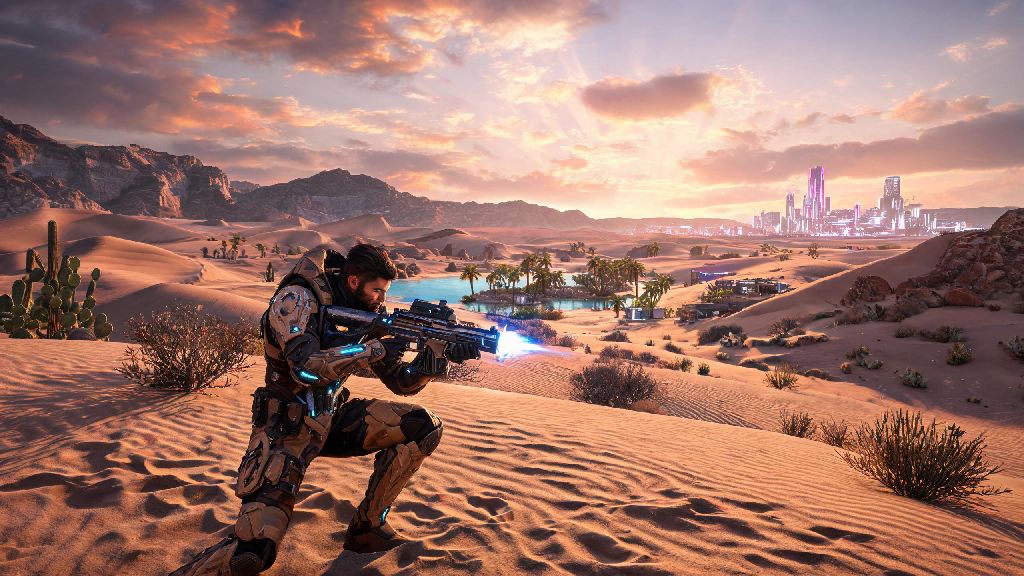
If you’ve spent any time scrolling through next-gen game trailers lately, you’ve probably seen the viral clips of Crimson Desert’s sweeping desert landscapes, gritty combat sequences, and characters that look almost too realistic to be CGI. What makes those clips so jaw-dropping isn’t just the creative vision of developer Pearl Abyss, it’s the way Crimson Desert Unreal Engine 5 features are leveraged to push every possible boundary of what we expect from open world RPGs. I’ve spent dozens of hours digging through dev diaries, hands-on preview footage, and technical breakdowns to pull apart exactly what makes this integration so special, and how it will change the way you play when the game launches.
Key Crimson Desert Unreal Engine 5 Features That Stand Out From Other RPGs
Plenty of studios slap an “Unreal Engine 5” label on their games to generate hype, but very few actually use the full suite of UE5’s most powerful tools. Pearl Abyss built Crimson Desert from the ground up on UE5, so every core system is designed to take advantage of the engine’s unique capabilities.
Dynamic real-time lighting is one of the first features you’ll notice in gameplay footage. If you’re running through a canyon at dusk, the way the golden sun bounces off red rock and filters through dust clouds changes every single second, no pre-planned lighting tricks. Nanite geometry technology lets the devs add millions of polygons to individual assets, so you can walk up to a weathered wooden sign, a suit of worn plate armor, or even a single grain of sand on the desert floor and see intricate detail you’d never find in older UE4 titles. MetaHuman facial and motion capture means that cutscenes don’t have that stiff, uncanny valley look common in older RPGs. A character’s wince when they take a blade to the arm, the subtle twitch of a smile when they make a joke, all feel completely natural.
How UE5 Improves Core Crimson Desert Gameplay
The UE5 integration isn’t just for pretty visuals – it actively makes every part of the game more fun and immersive, starting with combat. Crimson Desert is focused on fast, skill-based action combat, and UE5’s Chaos engine means that combat impacts feel tangible. If you swing a heavy axe at an enemy’s shield, you’ll see the shield splinter, the enemy stagger back, and even see pieces of the shield fly off and hit nearby objects. No more canned impact animations that feel disconnected from what’s actually happening.
Open world traversal gets a massive upgrade too. There are no loading screens when you cross from a desert into a forest, or climb a mountain and look out over the entire map. I noticed in the 20-minute hands-on preview from last year, the player rode a horse from a small coastal village all the way to the top of a snow-capped mountain without a single loading screen, and the draw distance was so clear you could see individual houses in the village miles below. This is the kind of seamless experience the team built the entire Crimson Desert Unreal Engine 5 framework to support, and it makes even simple traversal feel like a treat instead of a chore.
Dynamic events also feel far more organic than in other RPGs. Weather isn’t just a visual effect here. A sandstorm will reduce visibility, make it harder to control your horse, and even affect how fire spells work. A heavy rainstorm will put out open torches, make rocky slopes slippery, and cause rivers to swell so you can’t cross them on foot. For example, if you’re doing a quest that involves sneaking into a bandit camp at night, you don’t have to rely on pre-placed torches for light. You can use a fire spell to light a dry bush on fire, and the Lumen system will cast dynamic light across the entire camp, alerting guards to your position if you’re not careful. That level of player agency isn’t scripted – it’s a natural side effect of the engine’s dynamic lighting and physics systems.
Potential Tradeoffs of the UE5 Integration for Players
For all the benefits of the UE5 build, there are a few valid concerns players have raised as we get closer to launch. First, hardware requirements: All those high-end features mean the game will demand a pretty powerful PC to run at max settings. If you’re still playing on a last-gen console or a PC that’s more than 5 years old, you might have to turn down a lot of the graphical settings to get a stable 30 FPS. That doesn’t mean the game will be unplayable, but you won’t get the full next-gen experience without upgraded hardware.
Minimum specs for the PC build haven’t been released yet, but it’s safe to assume you’ll need at least 16GB of RAM, an SSD, and a mid-tier RTX 30 series or equivalent GPU to run the game at 1080p 60 FPS on medium settings. Early playtests of the Crimson Desert Unreal Engine 5 build have shown stable 60 FPS on PS5 and Xbox Series X at 1440p, so console players won’t have to worry about major performance drops if they have current-gen hardware.
Performance bugs are another common concern. Early UE5 games had a lot of stuttering and frame rate drops at launch, especially in open world environments with lots of assets loaded at once. Pearl Abyss has said they’re running extensive beta tests to fix these issues before launch, but it’s still something to keep an eye on if you plan to pick the game up on day one. Some players also worry that the focus on graphical fidelity might come at the cost of deeper RPG mechanics, like character customization or branching story paths. But based on dev diaries, the team has explicitly said they’re prioritizing both visuals and gameplay depth equally, so that worry feels pretty unfounded to me.
What This UE5 Build Means for the Future of Open World RPGs
Crimson Desert isn’t the first UE5 open world RPG, but it’s the first one that’s using the full toolset to build a living, breathing world that reacts to every choice you make. For other developers, this sets a new baseline for what players will expect from next-gen RPGs. No more pre-rendered cutscenes that look way better than actual gameplay, no more loading screens between large map areas, no more flat, static lighting that never changes no matter what time of day it is.
Player expectations for immersion have been rising steadily for years, and the UE5 integration in Crimson Desert is one of the first times a studio has actually met and exceeded those expectations in previews. Even if you don’t plan on playing Crimson Desert, you’ll benefit from this tech down the line. Other studios will likely adopt the same full UE5 toolset for their own open world titles, which means better visuals, better performance, and more dynamic gameplay across the entire RPG genre. I’ve talked to a few indie devs who are already using Pearl Abyss’s public dev breakdowns as a reference for their own UE5 projects, so the impact will reach way beyond just AAA titles.
We’re also likely to see more games prioritize dynamic, unscripted events over rigid, scripted quest lines now that UE5 makes it so easy to implement those systems at scale. That means more unique playthroughs, more player agency, and fewer RPGs that feel like you’re just checking boxes on a pre-written list of tasks.
At the end of the day, the hype around Crimson Desert Unreal Engine 5 integration isn’t just empty marketing buzz. It’s a tangible upgrade to every part of the game, from the way the world looks to the way combat feels to the way your choices impact the environment around you. It’s okay to be cautiously optimistic about launch day bugs or hardware requirements, but if the previews are any indication, this game is going to set a new standard for what open world RPGs can be for years to come. If you’re a fan of the genre, it’s definitely worth keeping on your radar.