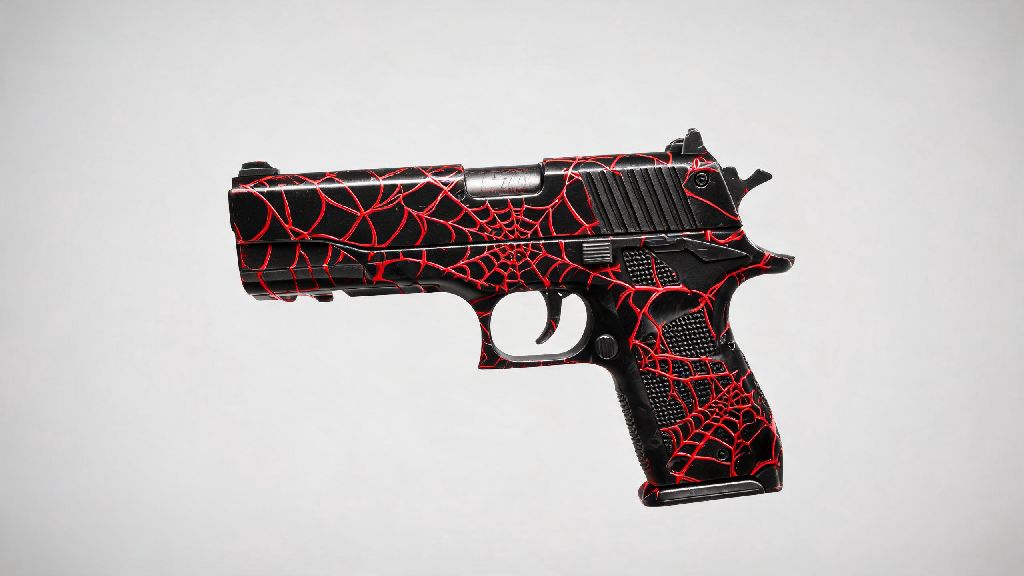
If you’ve spent any time scrolling CS2 community market listings or hanging around trading lobbies, you’ve almost certainly stopped to stare at the iconic red and black web pattern of the Desert Eagle Crimson Web. As a casual collector of pistol skins for the last 8 years, I can tell you no other Deagle skin commands the same level of attention as this one, especially in pristine condition. The desert eagle crimson web factory new is far more than a cosmetic upgrade for your loadout—it’s a status symbol, a potentially valuable investment, and a piece of Counter-Strike history all rolled into one. This guide breaks down everything you need to know before you add one to your collection, from how rarity drives price to the red flags to watch for when buying from third-party sellers.
What Makes the Desert Eagle Crimson Web Factory New So Rare?
To understand why this skin sells for hundreds (and sometimes thousands) of dollars, you first have to look at its origin. The Desert Eagle Crimson Web was first added to the game as part of the CS:GO Weapon Case 2, which dropped all the way back in 2013. This case is no longer part of the active drop pool for CS2 matches, meaning the only supply left comes from unopened cases held by collectors and existing skins circulating in the market. That supply shrinks a little more every month, as players open stored cases or keep skins in their permanent collections.
Even when the case was still actively dropping, pulling a Desert Eagle Crimson Web was incredibly uncommon. Classified-grade skins like this one have a 3.2% drop rate per case, so you’d have to open more than 30 cases on average just to get one. On top of that, only a tiny fraction of those drops qualify as Factory New. Float values below 0.07 are required for the Factory New wear tier, and less than 8% of all Desert Eagle Crimson Web drops fall into that range. Do the math, and you’re looking at roughly 1 Factory New Crimson Web Deagle for every 375 cases opened.
Pattern rarity adds another layer of exclusivity. The Crimson Web pattern generates randomly, and some skins have far more visible red webbing on the slide than others. Examples with unbroken webs covering the entire front and side of the slide are called “full web” variants, and they are up to 3 times rarer than standard pattern Factory New versions. I’ve only ever seen 2 full web low-float Factory New Crimson Web Deagles in person at trading meetups, and both sold for well over $700 the same day they were listed.
How to Gauge the Fair Market Value of Your Skin
Prices for this skin vary wildly depending on a handful of key factors, and it’s not uncommon to see two Factory New Crimson Web Deagles listed for $200 and $2,000 respectively on the same marketplace. The first factor that impacts price is float value, even within the Factory New tier. A skin with a 0.06 float (the highest possible for Factory New) will sell for far less than a 0.01 float “low-float” example, because low-float skins have virtually no visible wear even on close inspection. As of the latest market data, low-float non-stat-trak variants sell for 2 to 2.5 times more than high-end float Factory New versions.
Pattern quality is the second big driver of price. Full web coverage on the slide adds a 50% to 150% premium to the base price, depending on how crisp and evenly spaced the webs are. Skins with webs that are faded, cut off at the edge of the slide, or concentrated on the less visible grip area sell for far less, even if they have the same float value. Stat-trak variants also carry a massive premium: Stat-trak Factory New Crimson Web Deagles sell for 4 to 5 times more than non-stat-trak versions with the same float and pattern.
The biggest mistake new buyers make is relying solely on the lowest active listing on the Steam Market to gauge value. A lot of sellers inflate their listings by 20% to 30% hoping to catch an uninformed buyer, and those numbers don’t reflect what people are actually paying. 30-day sold listing data is the only reliable way to get a fair market value, because it shows completed transactions instead of arbitrary asking prices. For reference, standard pattern non-stat-trak Factory New Crimson Web Deagles sold for between $185 and $260 over the last 30 days, while low-float full web stat-trak examples sold for $2,800 to $3,400.
Key Checks to Run Before You Buy a Desert Eagle Crimson Web Factory New
Scams and mislabeled listings are incredibly common for high-value skins like this one, so you need to run through a short list of checks every time you consider a purchase, no matter how reputable the seller seems. I learned this the hard way a few years back, when I almost overpaid $120 for a skin the seller labeled as full web, only to notice one of the webs was cut off when I pulled up the inspect link. These checks only take 2 to 3 minutes, and they can save you hundreds of dollars in wasted money.
You should also avoid buying from sellers who refuse to send a direct inspect link, or who try to push you to complete the transaction off of a verified marketplace. These are almost always scams, and you’ll have no way to get your money back if the skin never arrives or isn’t as described.
Should You Add This Skin to Your Collection or Flip It for Profit?
Now that you know what to look for, you might be wondering if this skin is a good buy for your collection or a solid investment for flipping. The answer depends entirely on your goals. If you’re a long-time Desert Eagle main who wants a iconic skin to show off in matches, this is one of the best purchases you can make. It’s held its value consistently for more than a decade, and it’s universally recognized as one of the best pistol skins in the game. I’ve had mine for 6 years, and people still ask to inspect it almost every match I play.
If you’re looking to flip skins for profit, this skin can be a solid option if you know what to look for. A lot of new sellers don’t understand the value of full web patterns or low float values, so you can occasionally find listings underpriced by $100 to $300. Standard pattern non-stat-trak variants are the best for flipping, because they have the most consistent demand and usually sell within 7 to 10 days of listing. That said, CS2 skin market volatility is a real risk. If Valve ever re-releases the CS:GO Weapon Case 2 in a future update, the supply of this skin would jump overnight, and values could drop by 30% or more in a week. Never invest more money in skins than you can afford to lose.
If you’re buying for long-term collection and potential appreciation, prioritize low-float full web stat-trak variants. These have the lowest supply and the highest demand from serious collectors, and they’ve increased in value by an average of 18% per year for the last 5 years. They do take longer to sell if you ever decide to offload them, but they hold their value far better than standard pattern variants during market dips.
At the end of the day, the desert eagle crimson web factory new is more than just a cosmetic for your loadout. It’s a piece of Counter-Strike history that has remained popular with players and collectors for more than 10 years, and it shows no signs of falling out of favor any time soon. Whether you’re buying to show off in competitive matches, add to a growing skin collection, or flip for a small profit, following the tips in this guide will help you avoid common scams, get a fair price, and walk away with a skin you’ll be happy with for years to come. Take your time, check every detail, and don’t rush into a purchase just because a listing seems like a good deal.